Patient safety 29 October 2026 · 2 min read
Critical value alerts: closing the loop between lab and doctor
Why critical lab values get missed, what a closed-loop alert process looks like, and how to record acknowledgement and escalation for patient safety and NABH.
 Team Paracitamol · hospital software & marketing · 14+ hospital clients
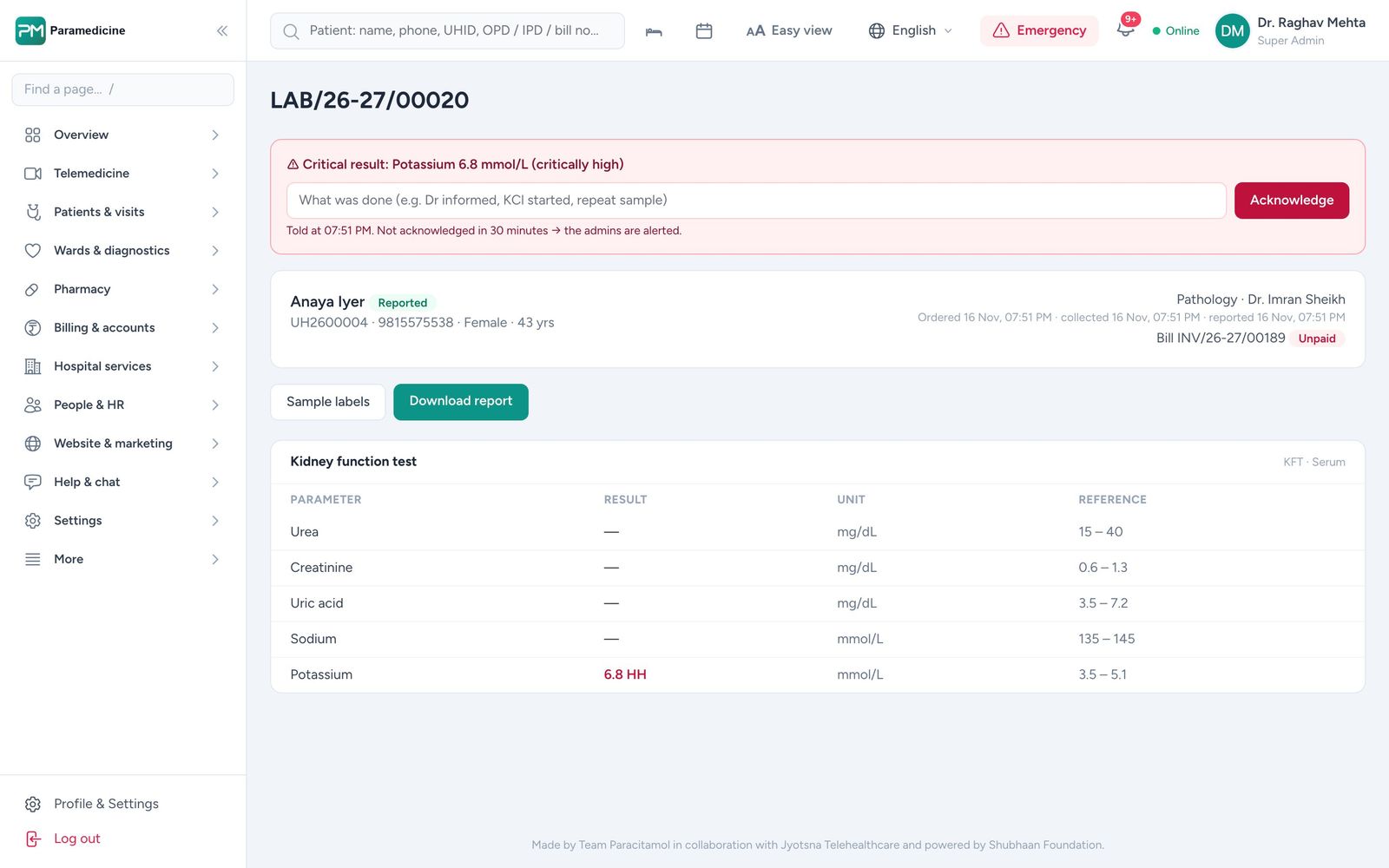
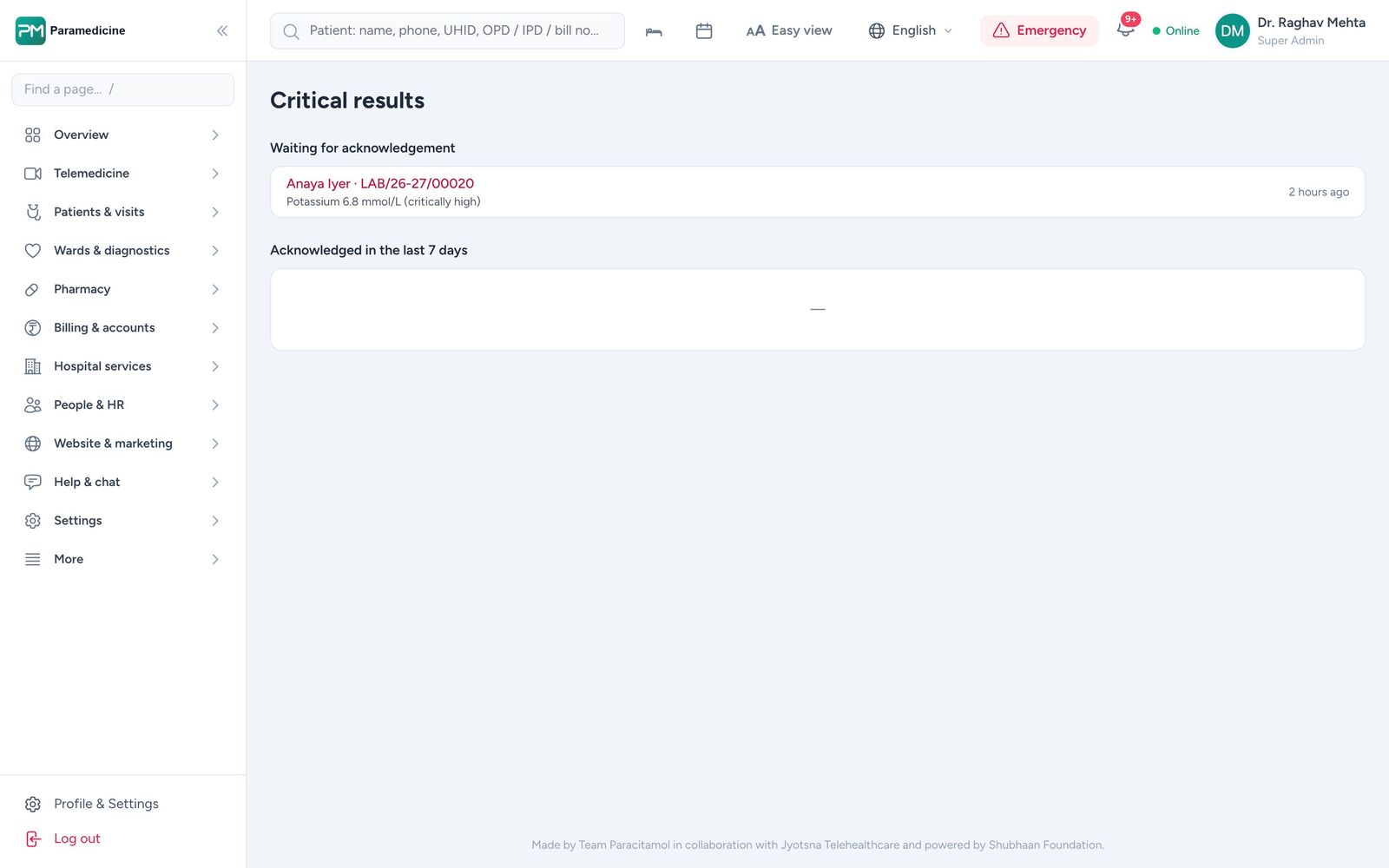
A potassium of 6.8 mmol/L is an emergency. In many hospitals it is also a line in a report that waits for a doctor to open it. Closing that gap is one of the simplest safety improvements a hospital can make.
Why critical values get missed
- The result is released at night and the treating doctor is off duty.
- The lab phones the ward, but nobody records who took the call.
- The report sits in a queue with routine results.
What closed-loop looks like
- Flag at sign-off. Each test has critical limits; crossing one flags the result the moment it is signed.
- Alert the right people. The treating doctor and the ward are notified at once — not just the lab.
- Record acknowledgement. Who acknowledged, at what time, and what was done.
- Escalate. If nobody acknowledges within a set time, such as 30 minutes, administrators are told.
This is how Paramedicine's lab module works, and each step leaves a timestamp.
Measure it
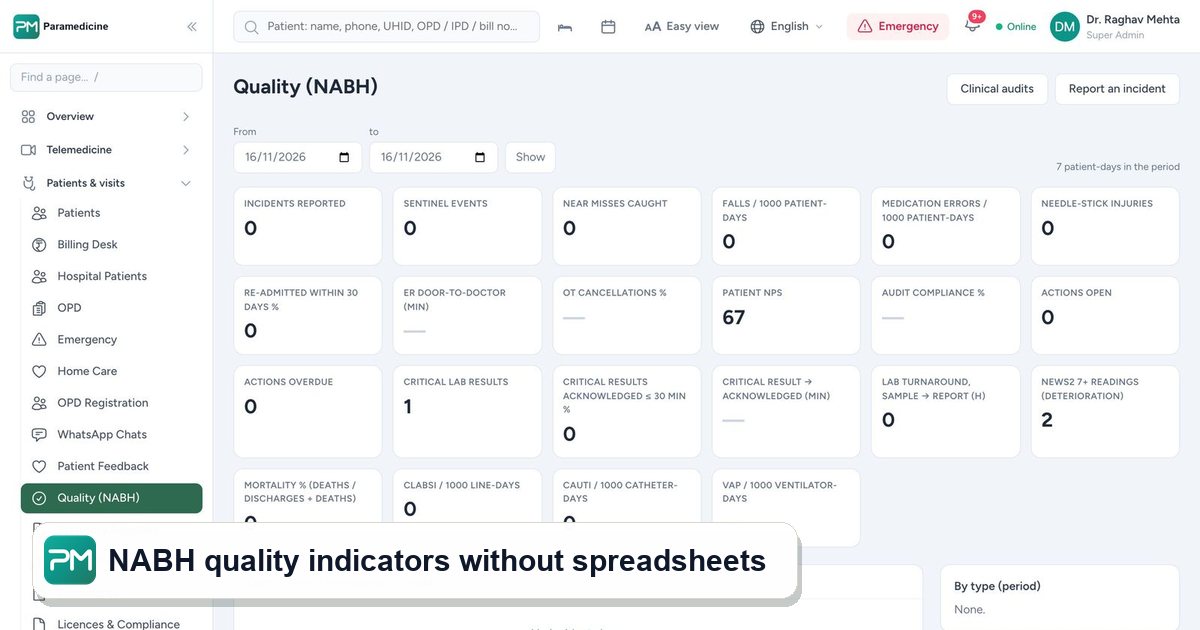
Critical-value turnaround — from sign-off to acknowledgement — is a useful quality indicator. When every step is timestamped, you can report it without a manual audit.
Extend the idea to the ward
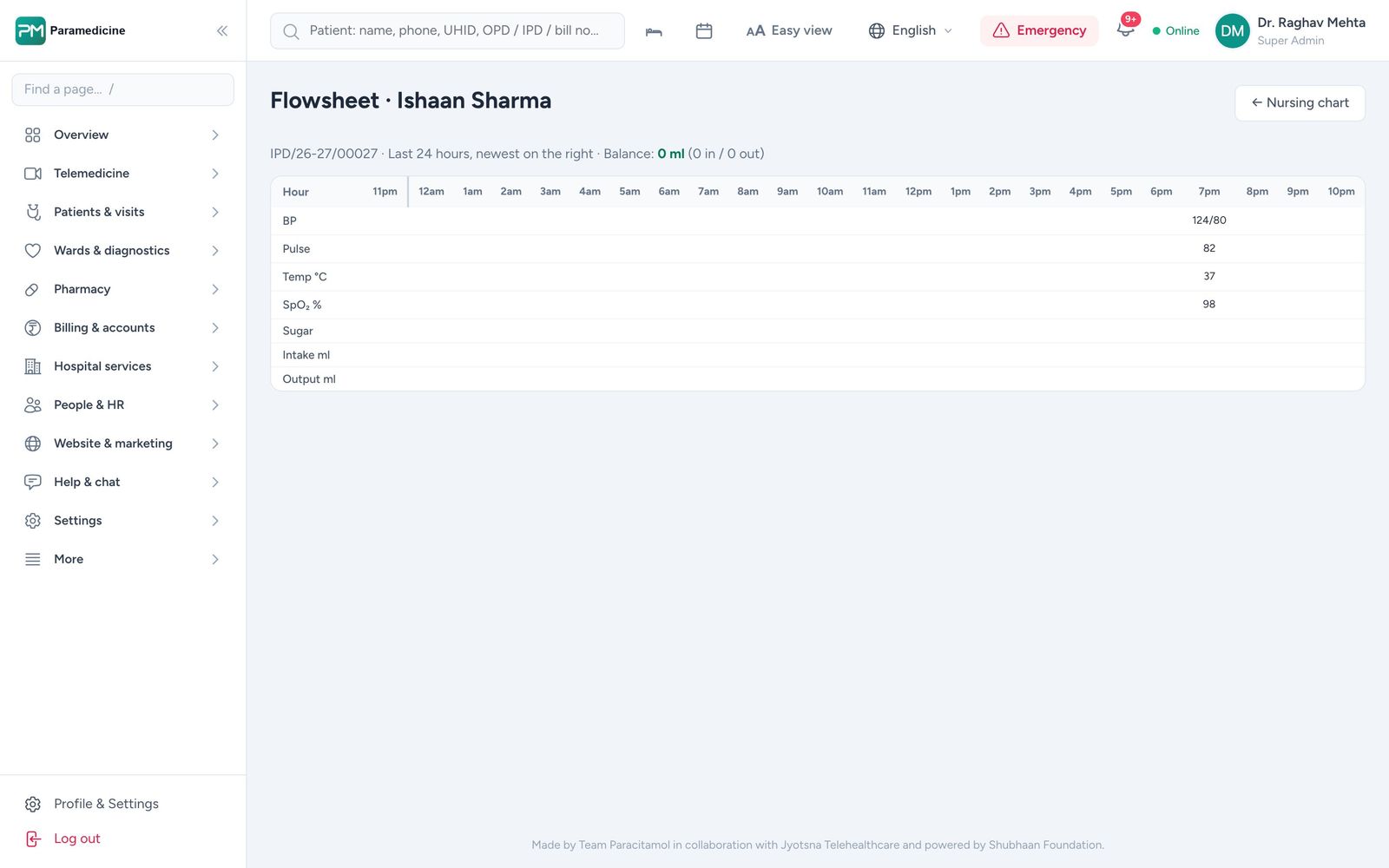
The same principle applies to early warning scores: a high NEWS2 should reach the doctor without depending on a phone call. Read about NEWS2 on the ward.
Paramedicine The product behind this article
Everything above runs on one patient record.
See the real screens, the product tour and how pricing follows the modules you switch on.