Nursing 24 October 2026 · 2 min read
NEWS2 early warning scores on the ward
What NEWS2 measures, how scores turn into action, and how bedside scoring with automatic alerts helps nurses catch deteriorating patients sooner.
 Team Paracitamol · hospital software & marketing · 14+ hospital clients
The National Early Warning Score 2 (NEWS2) turns routine observations into a single number that signals deterioration. It is simple — which is exactly why it works when it is calculated consistently.
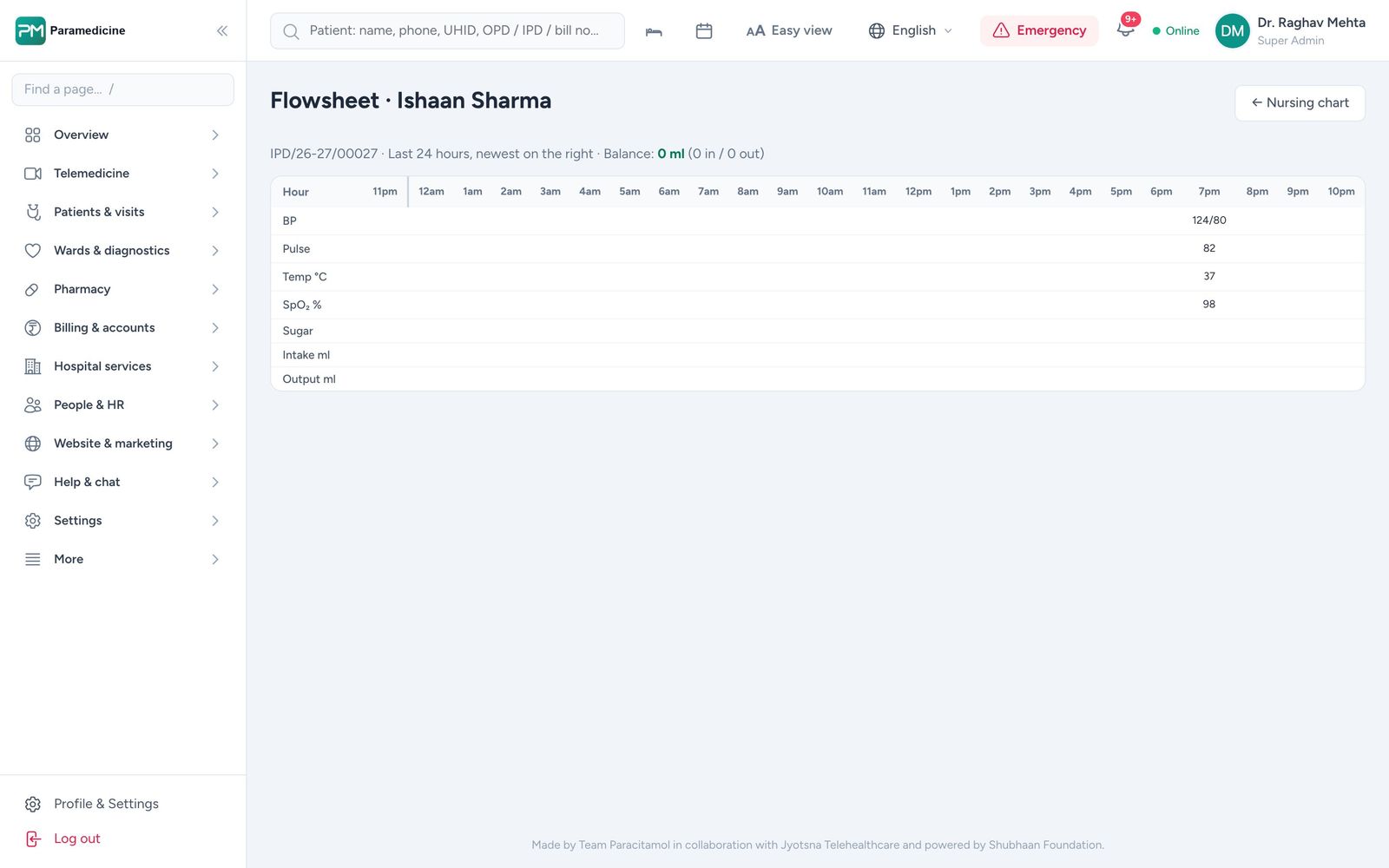
What goes into the score
- Respiratory rate
- Oxygen saturation (and whether the patient is on oxygen)
- Systolic blood pressure
- Pulse rate
- Level of consciousness or new confusion
- Temperature
From score to action
Hospitals set their own response policy, but a common pattern is: a total of 5 or more prompts an urgent review by the treating doctor, and 7 or more triggers an emergency response. Paramedicine uses those thresholds by default — 5+ alerts the treating doctor, 7+ alerts the whole nursing team.
Why manual scoring fails
Adding six parameters by hand at 3 am leads to errors, and a correct score still depends on someone making a call. Calculating NEWS2 automatically when vitals are entered at the bedside removes both problems.
Put the patients who need attention first
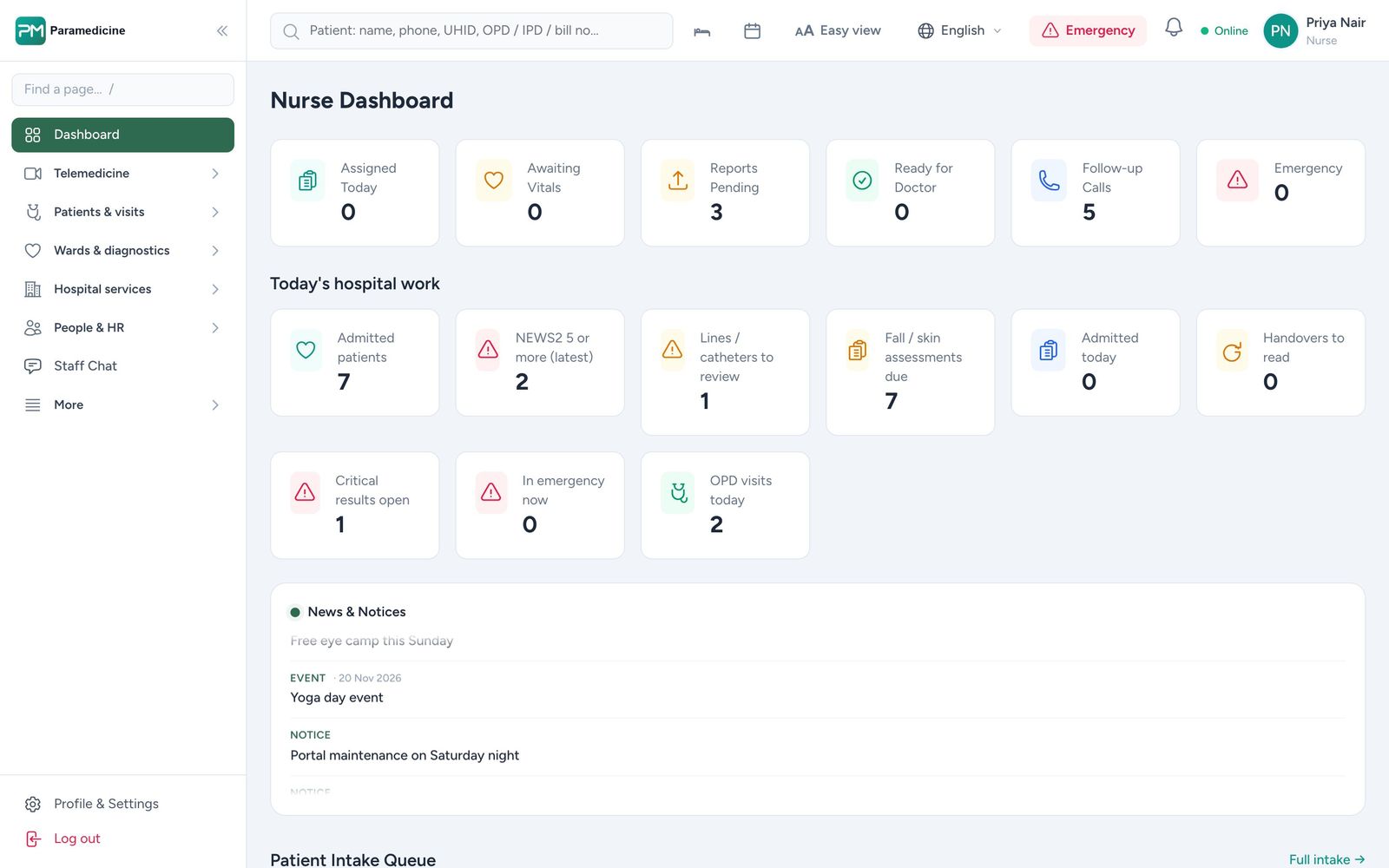
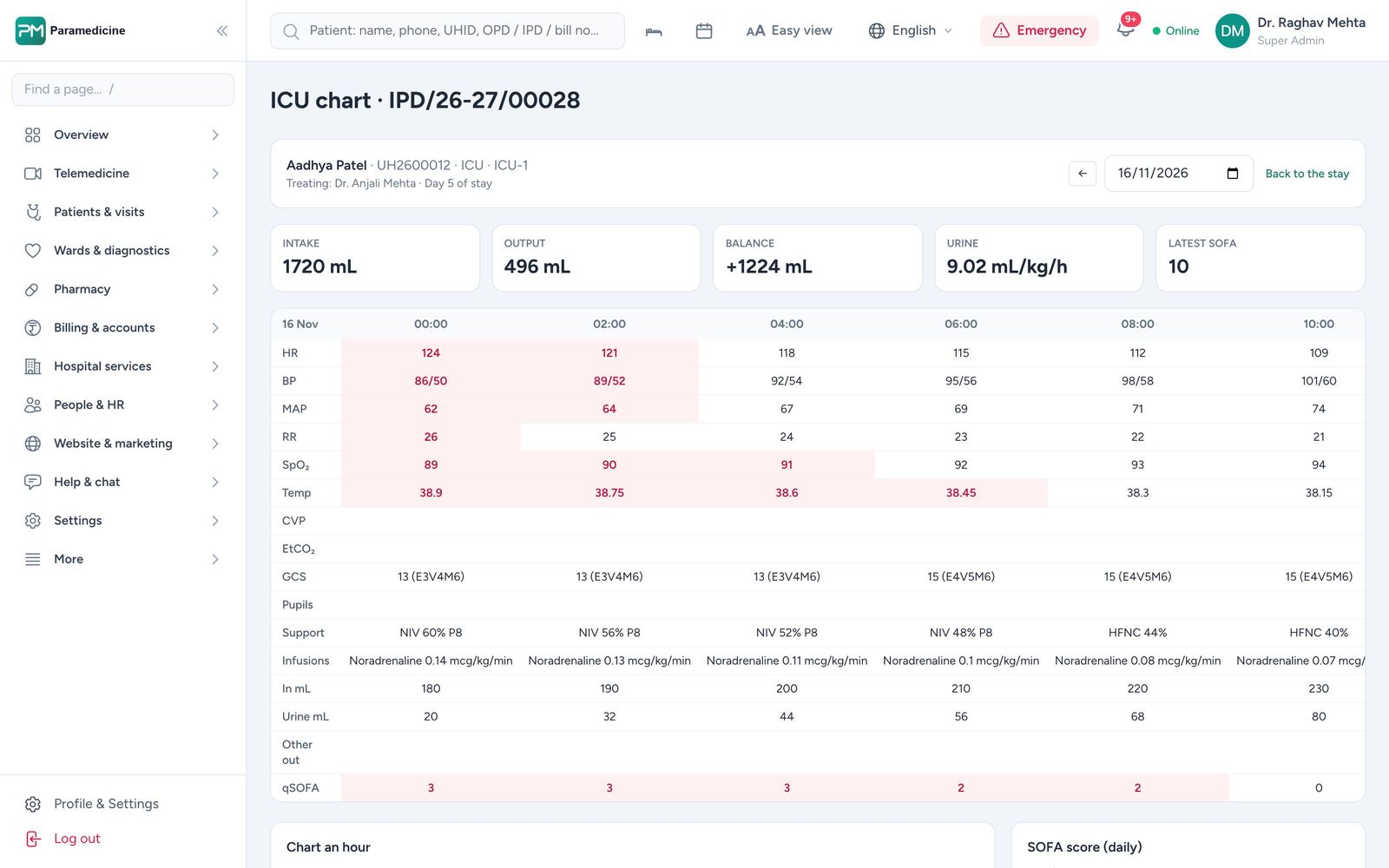
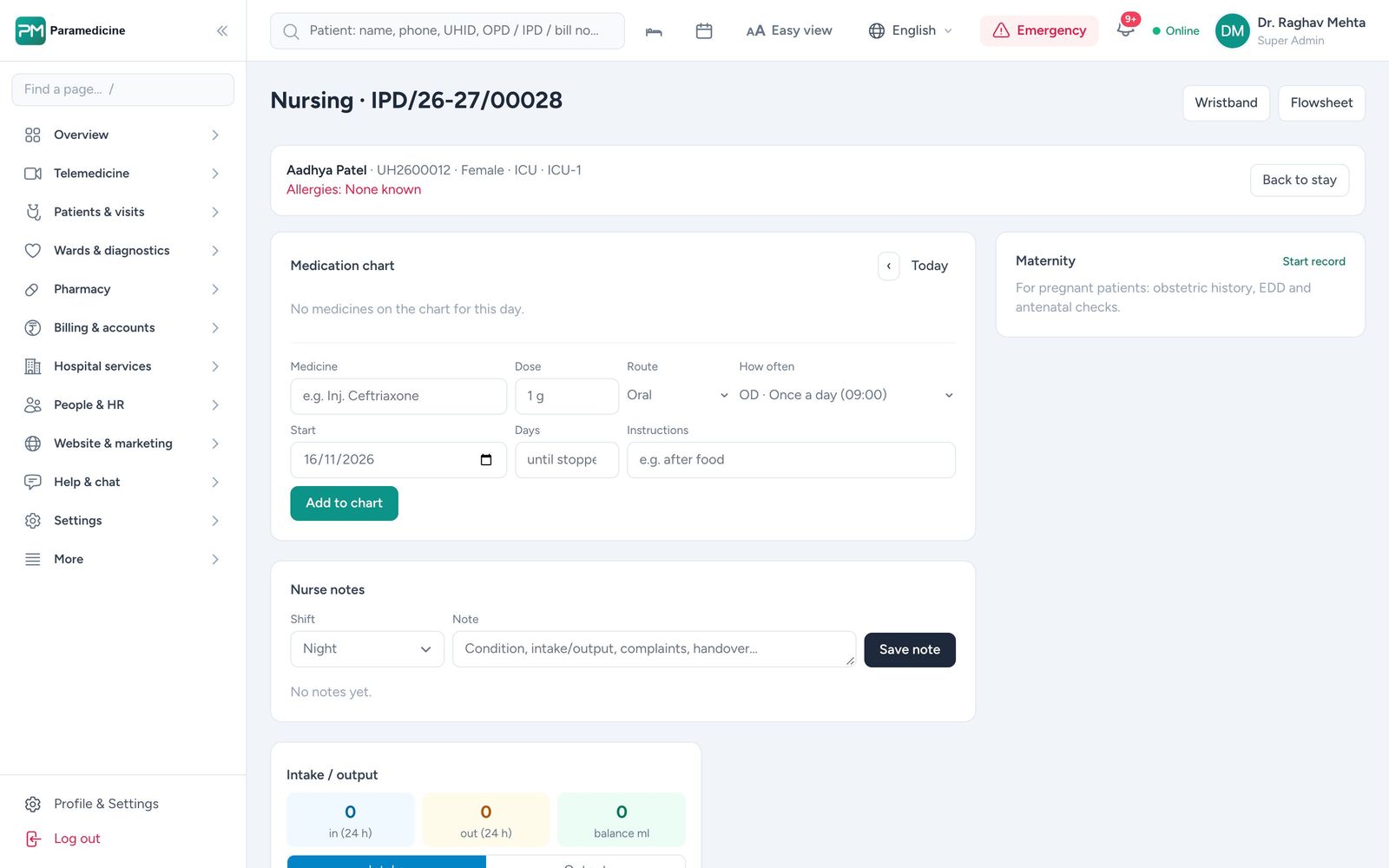
A nurse dashboard sorted by NEWS2, with assessments due, lines to review and medicines due, turns a list of beds into a list of priorities. See ICU and nursing in Paramedicine.
Pair it with risk assessments
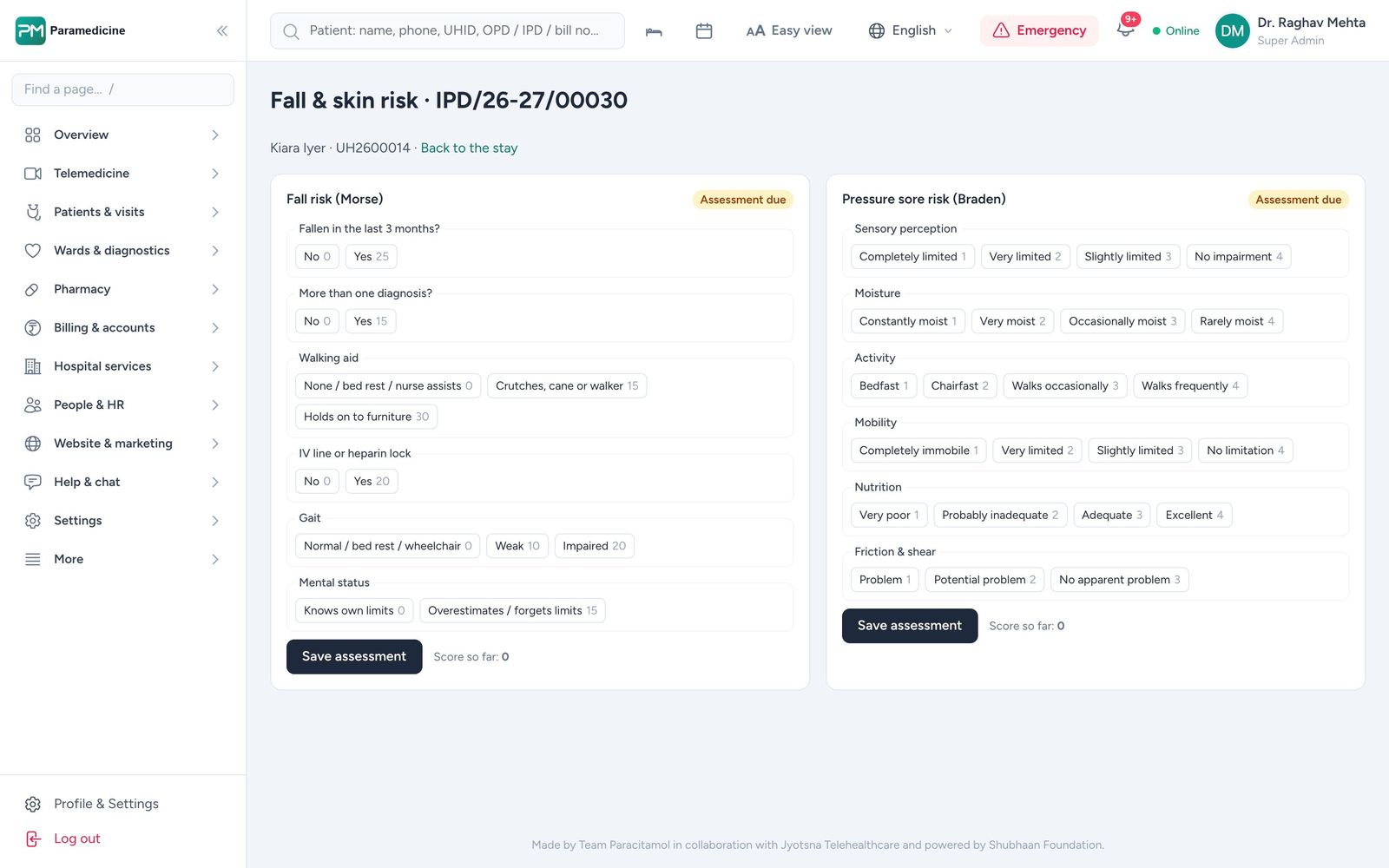
Morse fall risk and Braden pressure-sore risk complete the picture, each with a care plan and due date so reassessments are not forgotten.
Paramedicine The product behind this article
Everything above runs on one patient record.
See the real screens, the product tour and how pricing follows the modules you switch on.