Quality & NABH 3 November 2026 · 2 min read
NABH quality indicators without spreadsheets
Which NABH quality indicators hospitals track, why month-end spreadsheets fail, and how indicators can be calculated from everyday clinical records instead.
 Team Paracitamol · hospital software & marketing · 14+ hospital clients
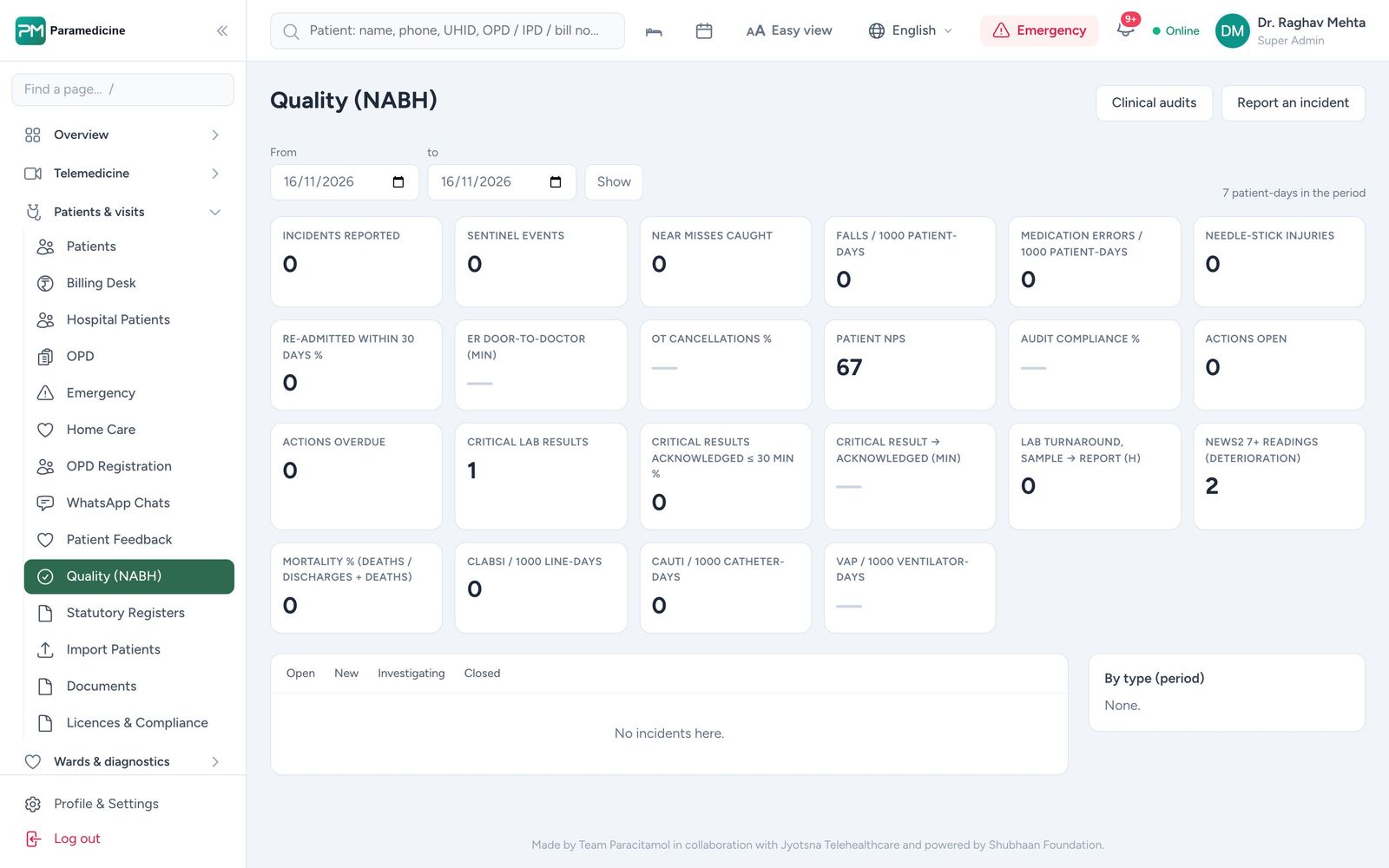
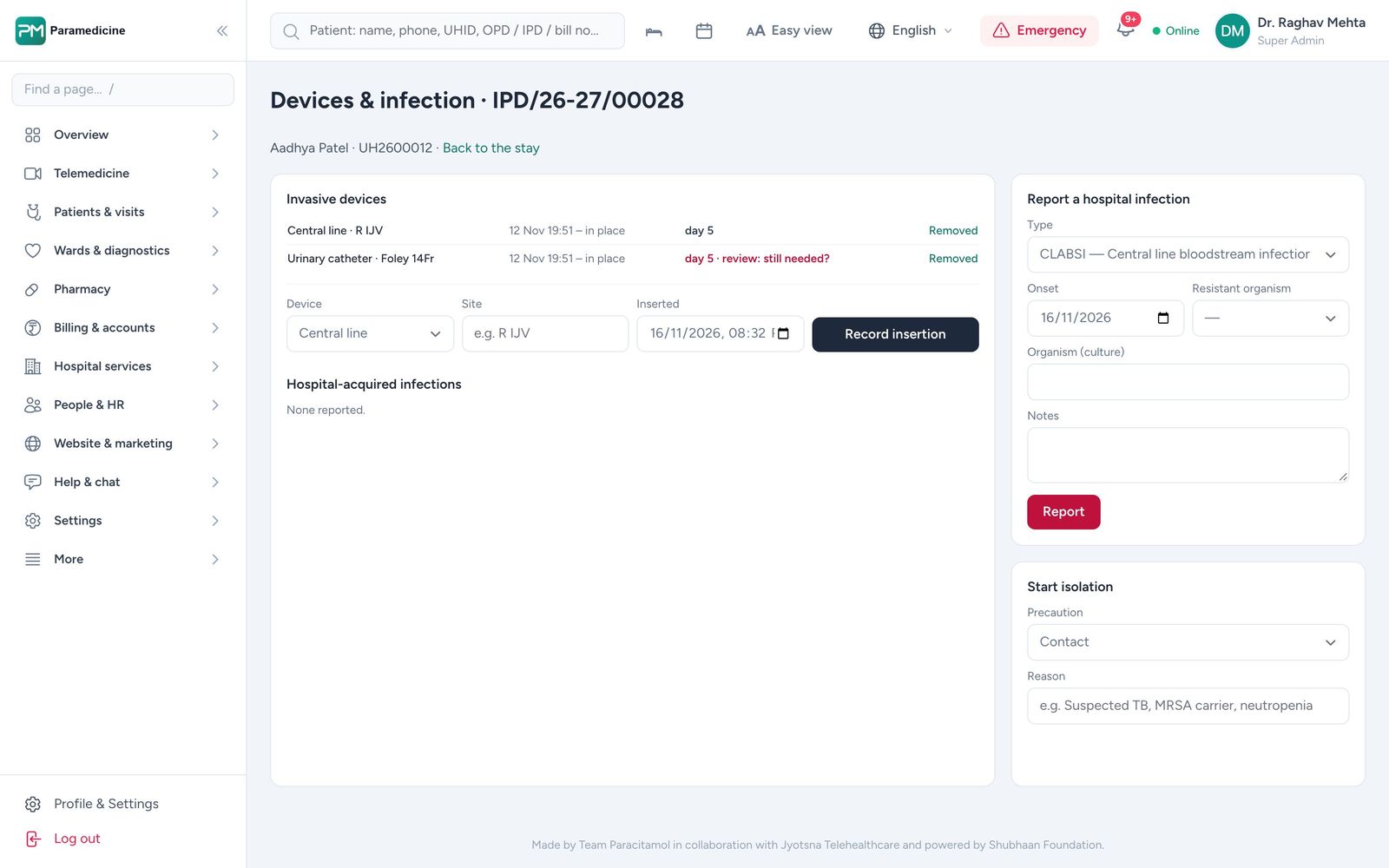
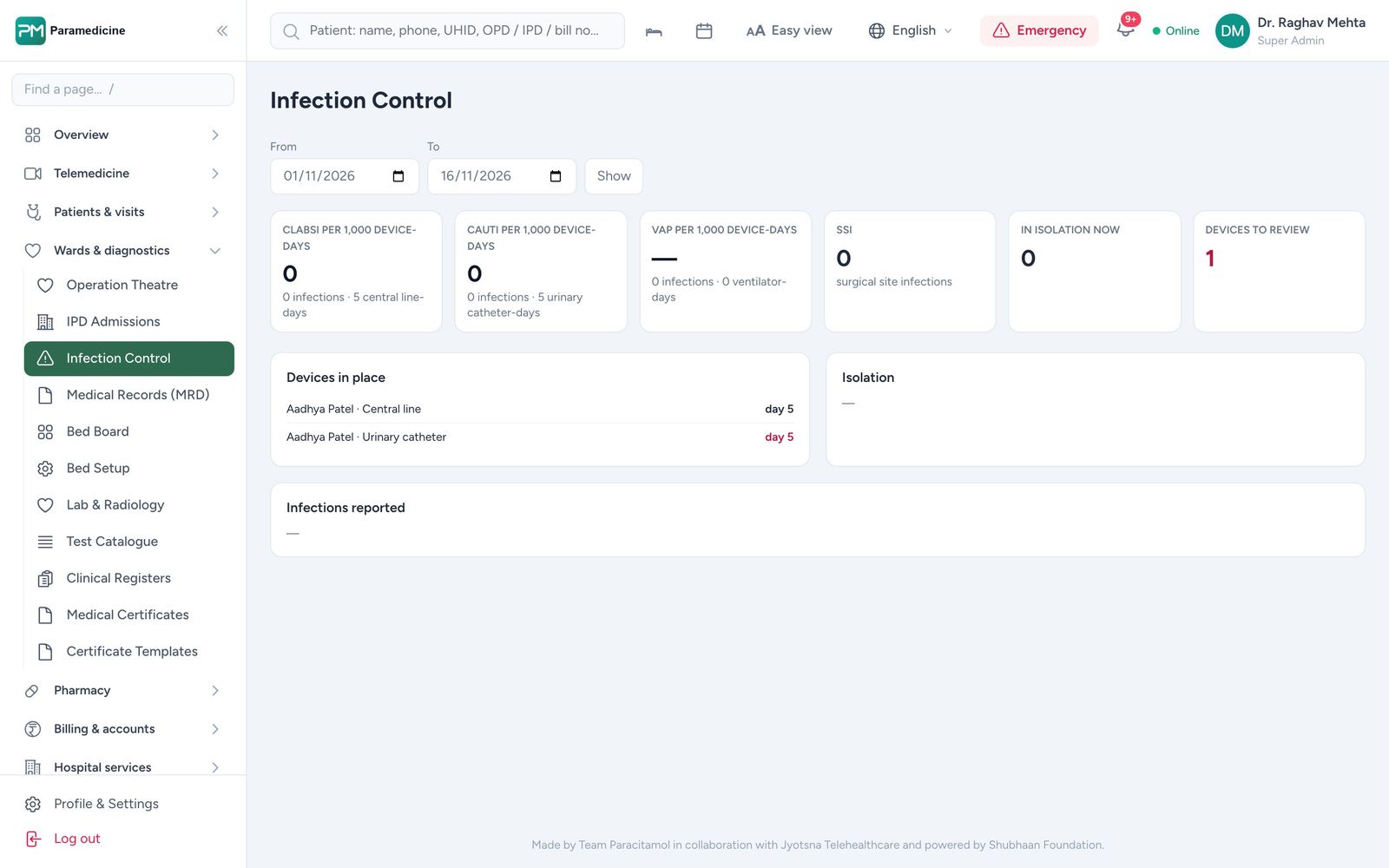
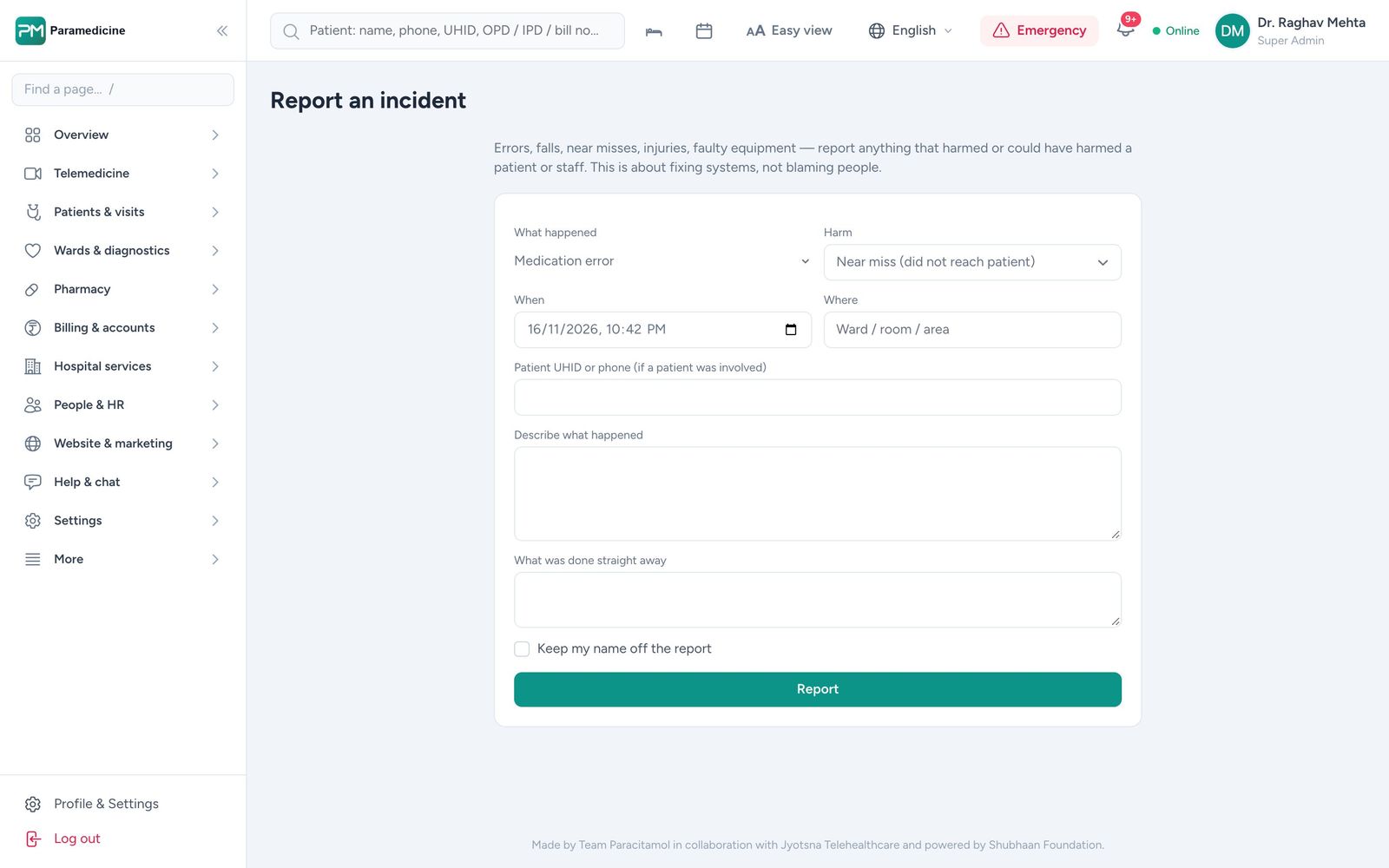
NABH assessors want to see that a hospital measures its quality and acts on what it finds. In most hospitals the measuring happens in a spreadsheet at month end, filled from registers and memory. The numbers are late, inconsistent and hard to defend.
What hospitals typically measure
- Patient falls and pressure injuries
- Medication errors and adverse drug events
- Unplanned readmissions and returns to ICU
- Device-associated infections — CLABSI, CAUTI, VAP — per 1,000 device days
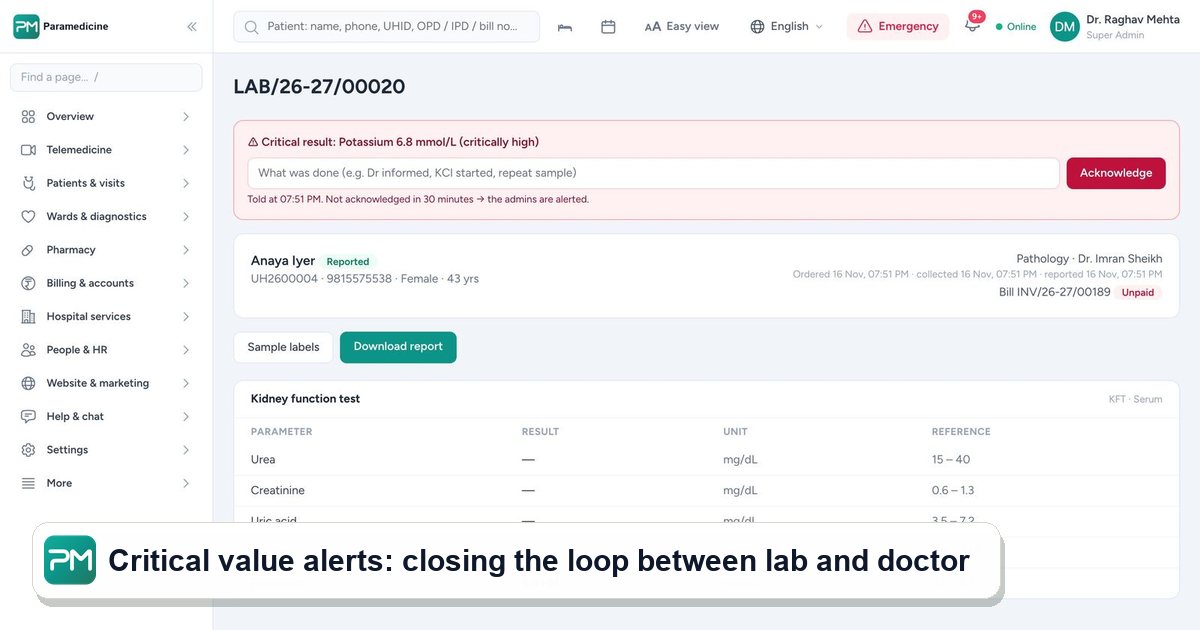
- Turnaround times, including critical-value reporting
- Patient satisfaction and complaints
Why spreadsheets fail
An infection rate needs both the infections and the device days. If device days are counted by hand, the rate is wrong before anyone looks at it. The same applies to falls (needs patient days) and readmissions (needs every discharge).
Calculate indicators from the work itself
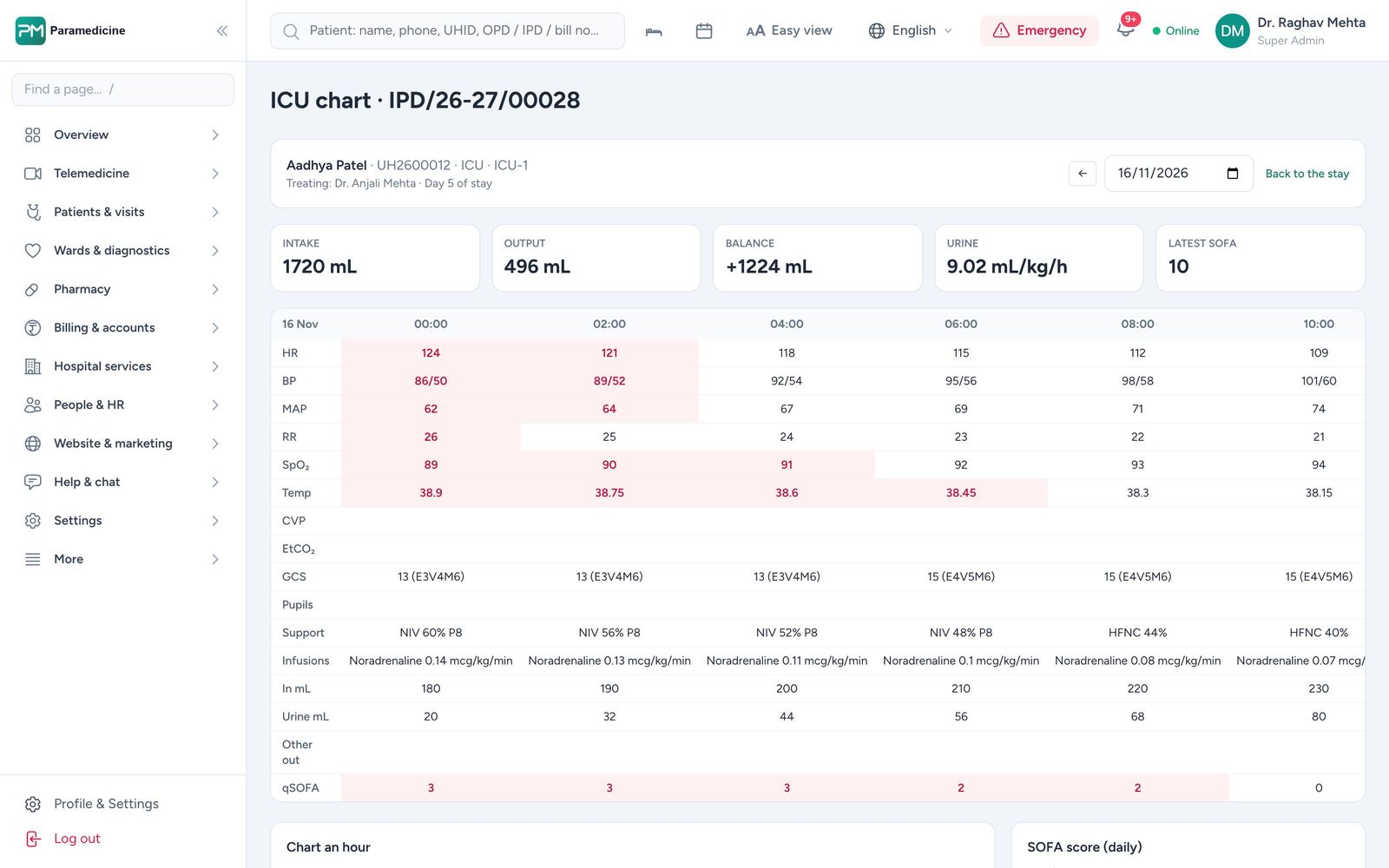
When nurses record a fall, start a catheter or note a line removal in the clinical record, the denominator and numerator already exist. Paramedicine computes indicators from those records, so the quality team reviews numbers instead of compiling them.
Close the loop
An indicator only matters if someone acts. Link each incident to a corrective action, and route alerts automatically — for example, a resistant organism starting isolation, or a catheter past day three prompting a review.
Keep registers with the indicators
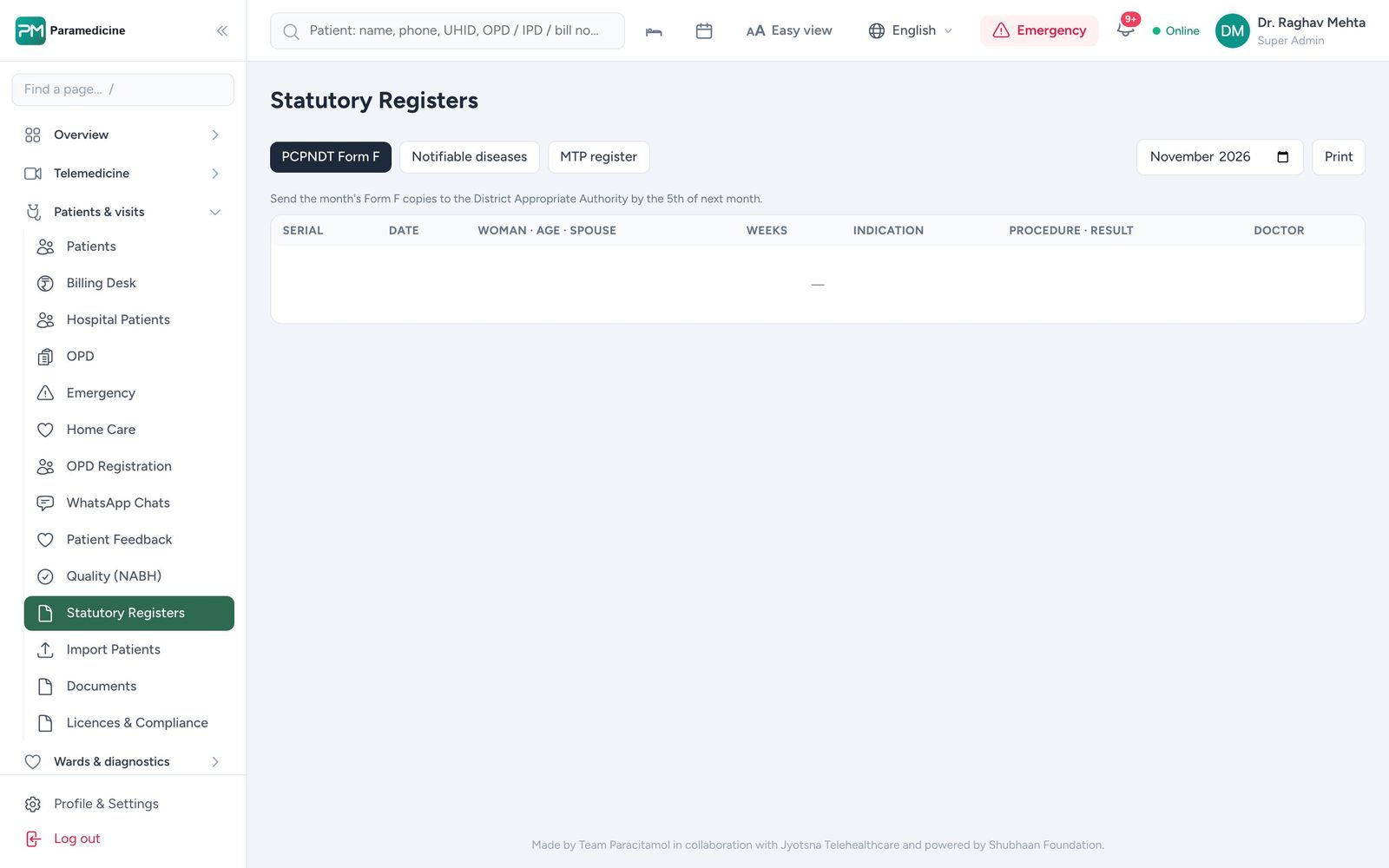
Birth, death, MLC, PCPNDT, MTP and notifiable-disease registers are part of the same evidence trail. When they fill themselves from clinical records, nothing is missed during an inspection.
Software does not grant accreditation — NABH does, after assessment. Good software makes the evidence easy to produce. See it on your data.
Paramedicine The product behind this article
Everything above runs on one patient record.
See the real screens, the product tour and how pricing follows the modules you switch on.